Domes are beautiful, efficient — and acoustic nightmares. We measured this one, designed a suspension system that could hang six tons of treatment from a concrete shell, installed it in twelve days, and measured it again.
A dome's curved shell focuses sound instead of scattering it. Every whistle, every bounce, every voice comes back — again, and again, and again. The measurement said 7.4 seconds of reverberation. Standing on the court, it feels closer to eleven.
I'll tell you exactly how bad it was. During one of the first tests, alone in the dome, I farted. The building repeated it. For about eight seconds. Nobody should hear that twice — this room played it back like an encore.
Funny until it's graduation day and a family in the bleachers can't make out their own kid's name. Coaches shouting over their own echoes. Referees' whistles that never quite end. The school didn't need a lecture on acoustics — it needed the room back.
An auralization built from the dome's measured impulse response: the space before treatment, then the same sound under treatment options. Modeling and measurement by MD Acoustics, the independent firm that tested the room. Nothing plays until you press play.
audio comparison · press play, use headphones if you can
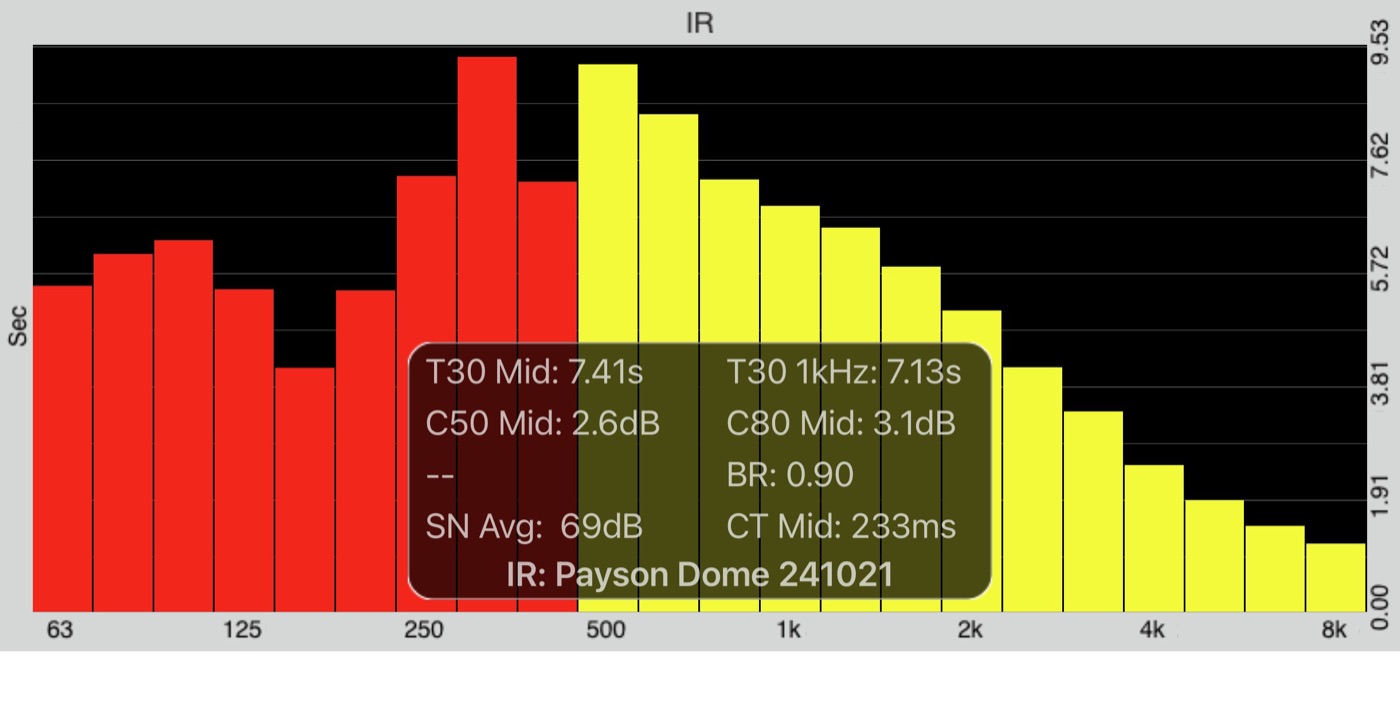
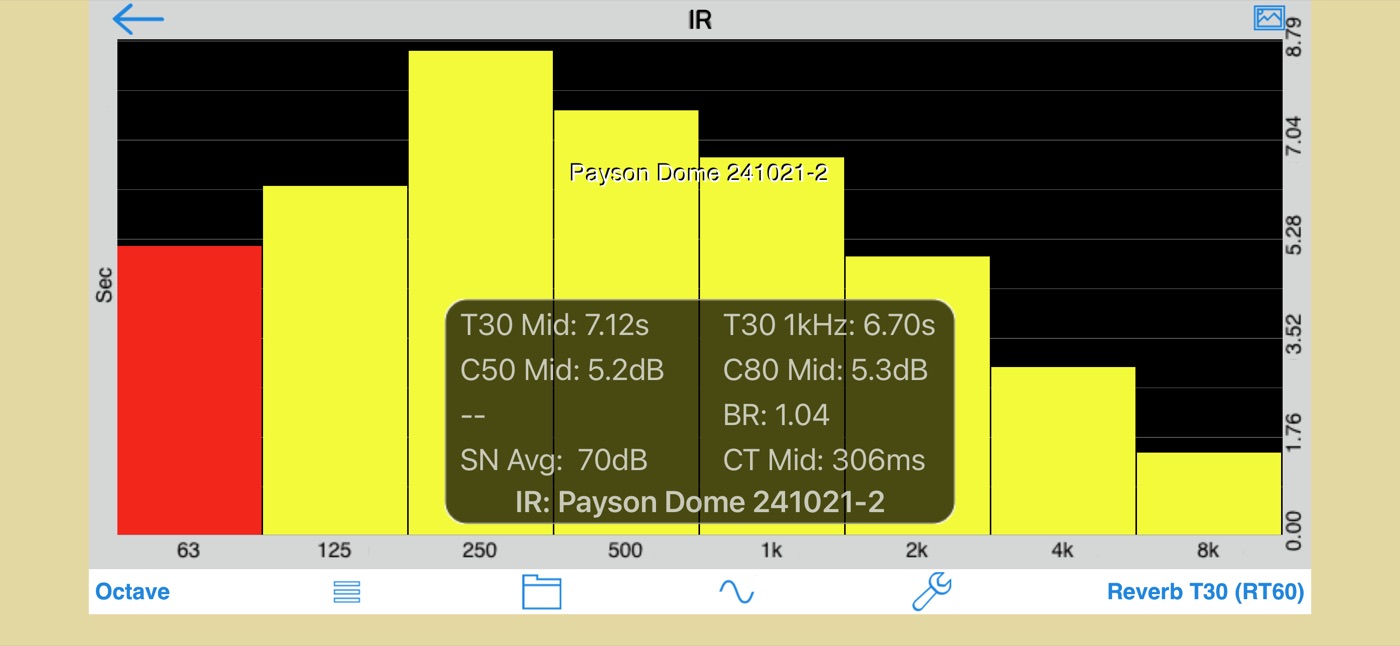
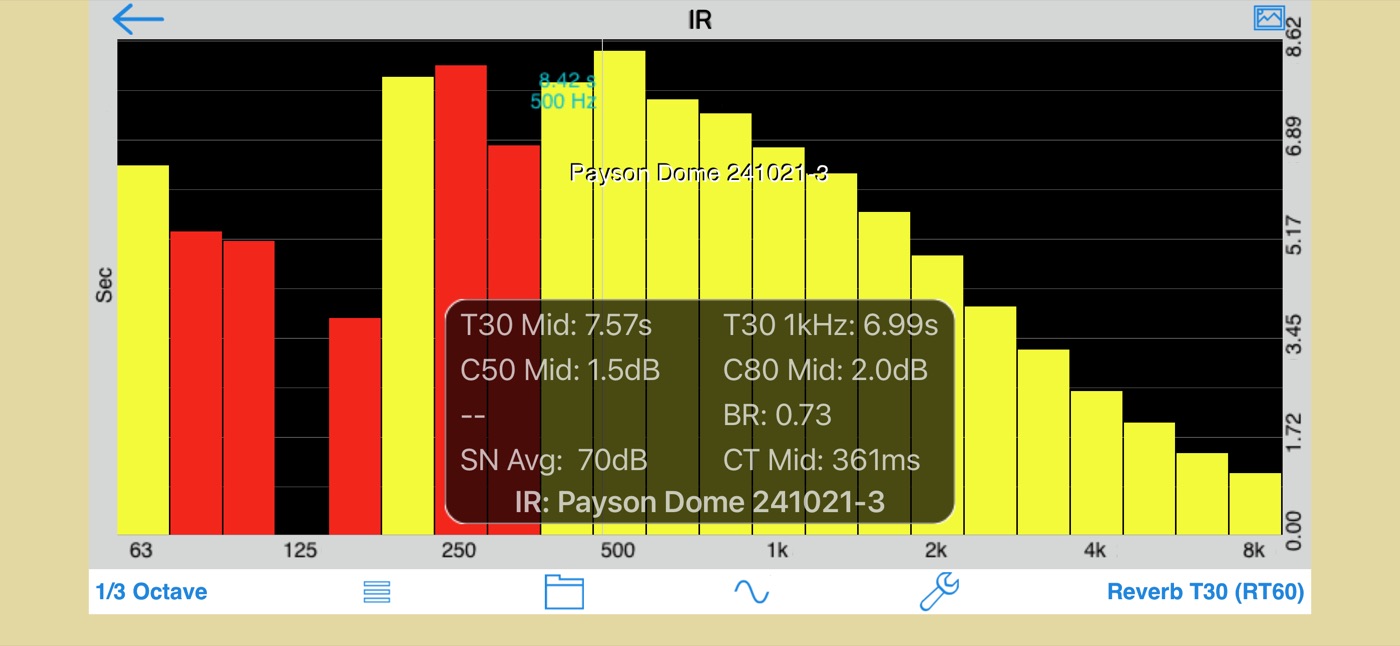
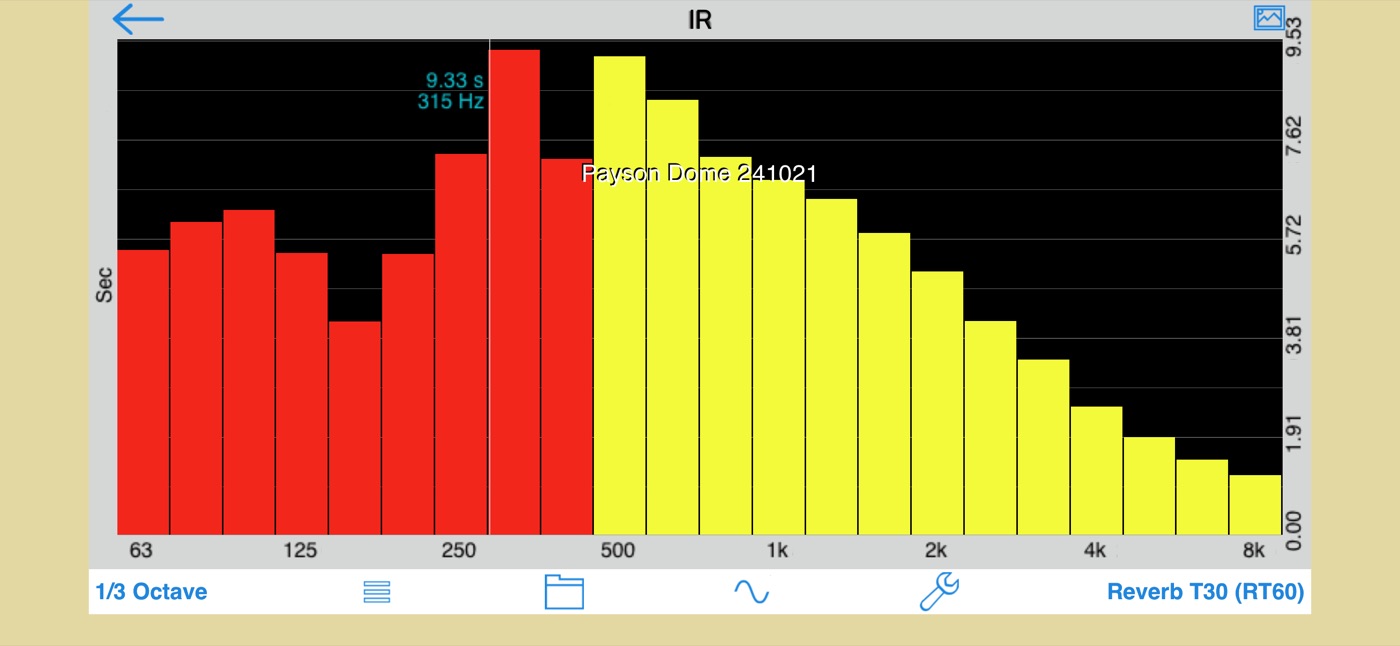
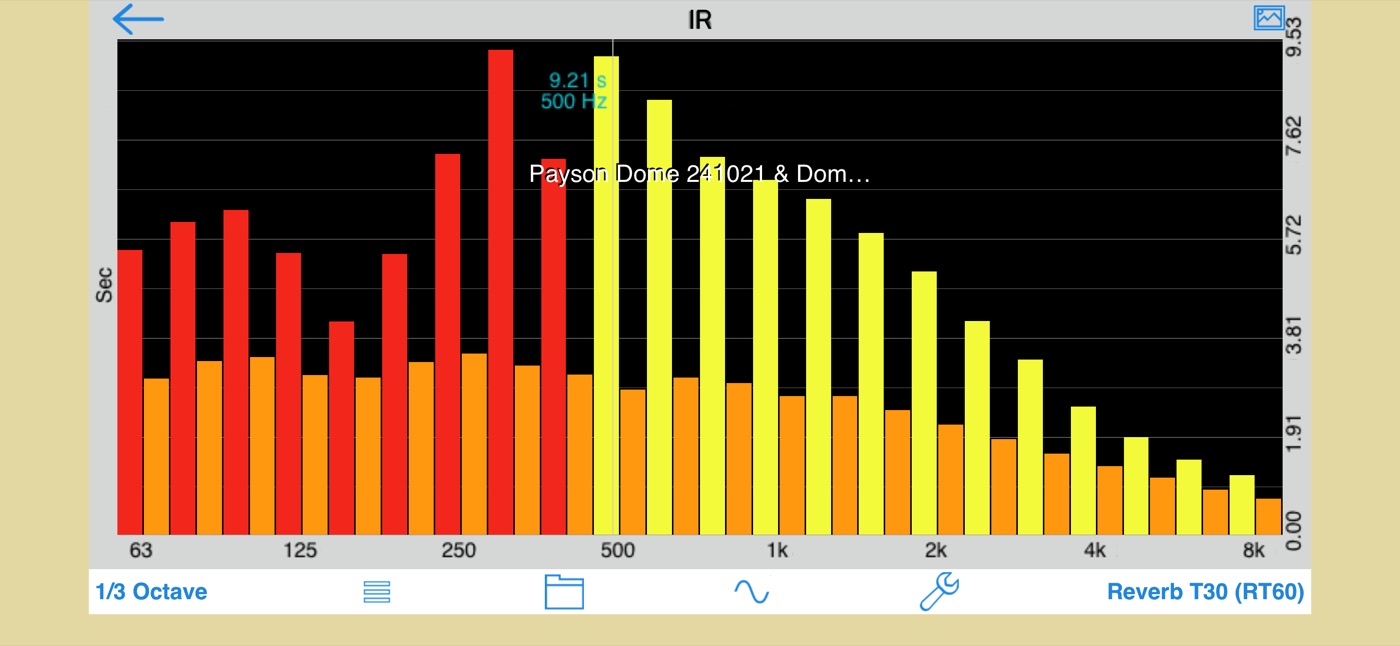
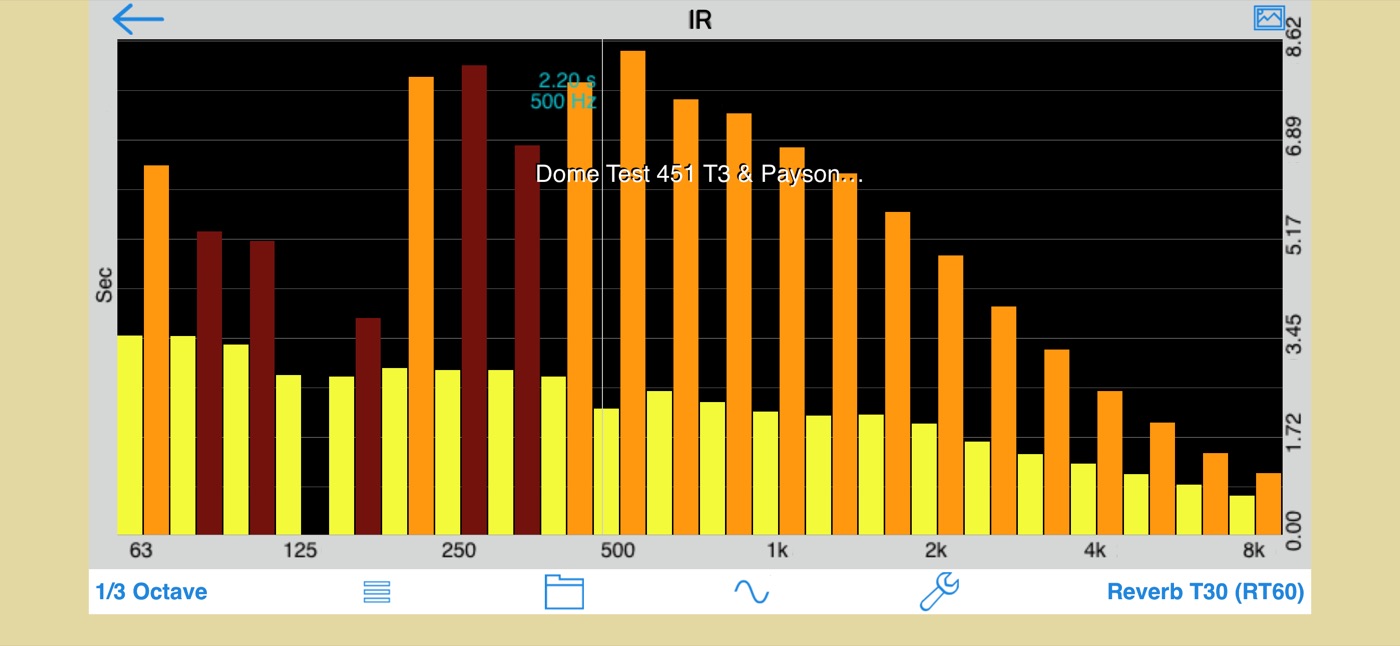
Reverberation time (T30) by octave band — redrawn for clarity from field measurements taken in the room. The worst of it lived in the low-mids: 9.33 seconds at 315 Hz. After treatment, the mid-band readout at 500 Hz: 2.20 seconds.
How these were taken, honestly. Field impulse-response tests: one microphone position, no temperature or humidity logging — run three times before treatment for repeatability, and again through the install. Simplified by design; the formal engineering measurement of the room belongs to MD Acoustics' independent report. Ours tracked the change, day by day.
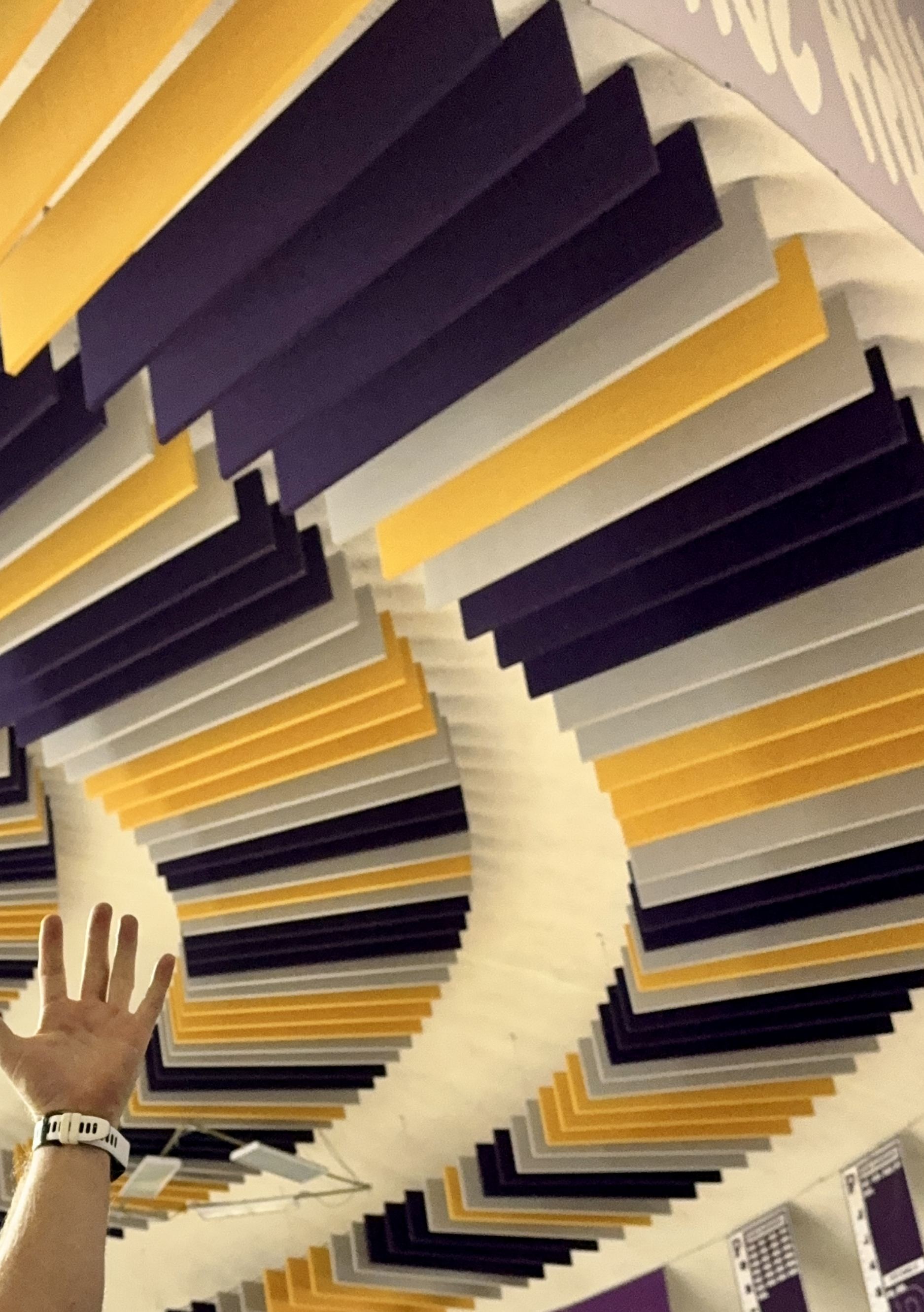
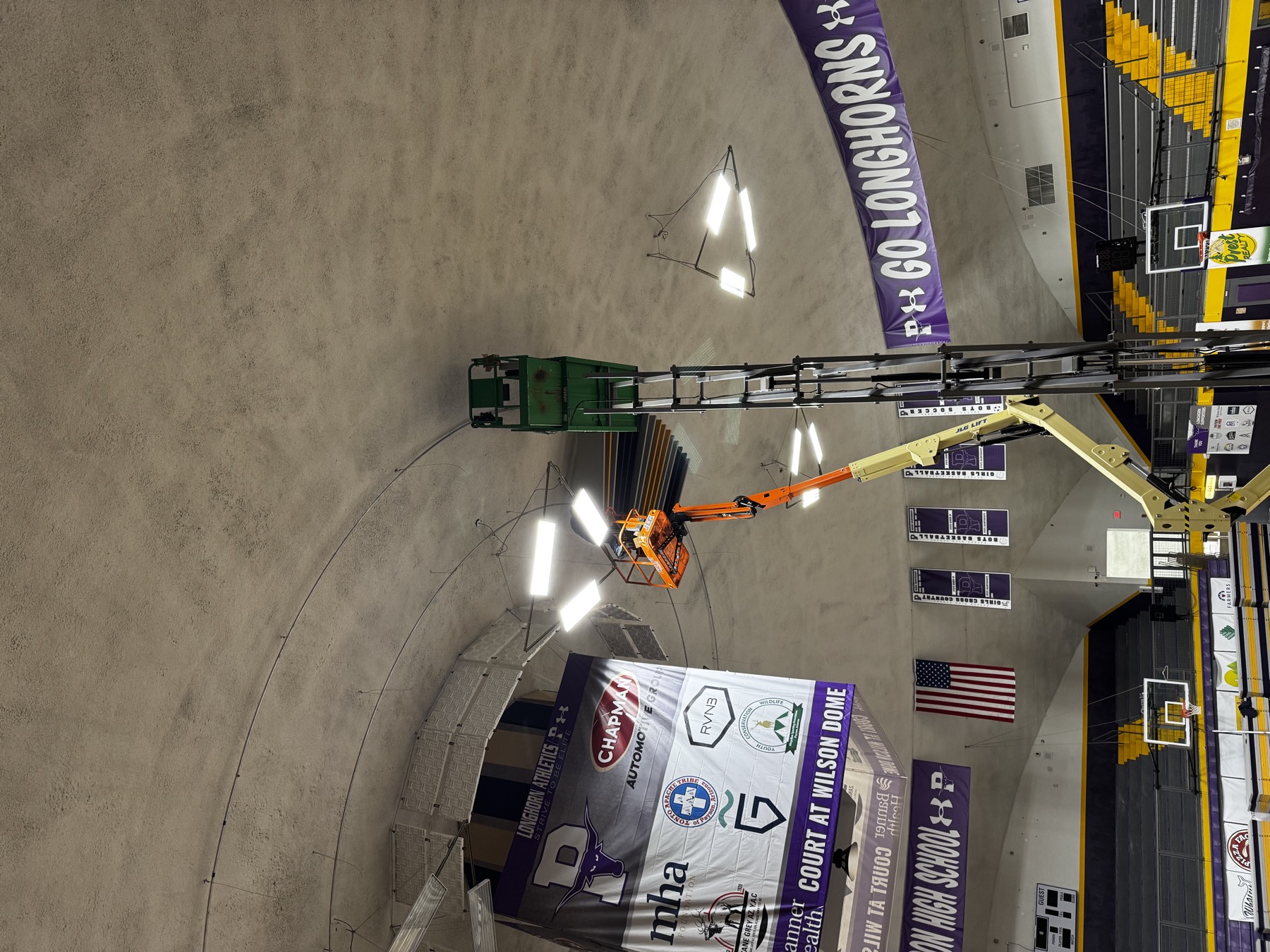
There was no off-the-shelf system for a monolithic shotcrete dome — so we designed one. 540 fabric-wrapped baffles in the school's colors, carried on three concentric ring structures: 12,360 pounds of treatment and steel, every pound suspended overhead, anchored directly into the shell.
Structural engineering held the line: redundant load paths, live load tests on the anchoring before a single baffle went up. When a pin came loose mid-install, the system held and the crew kept working — that's what engineering margin is for.
Twelve days, measured at every stage. Reverberation fell as the rings filled — you can watch it happen.
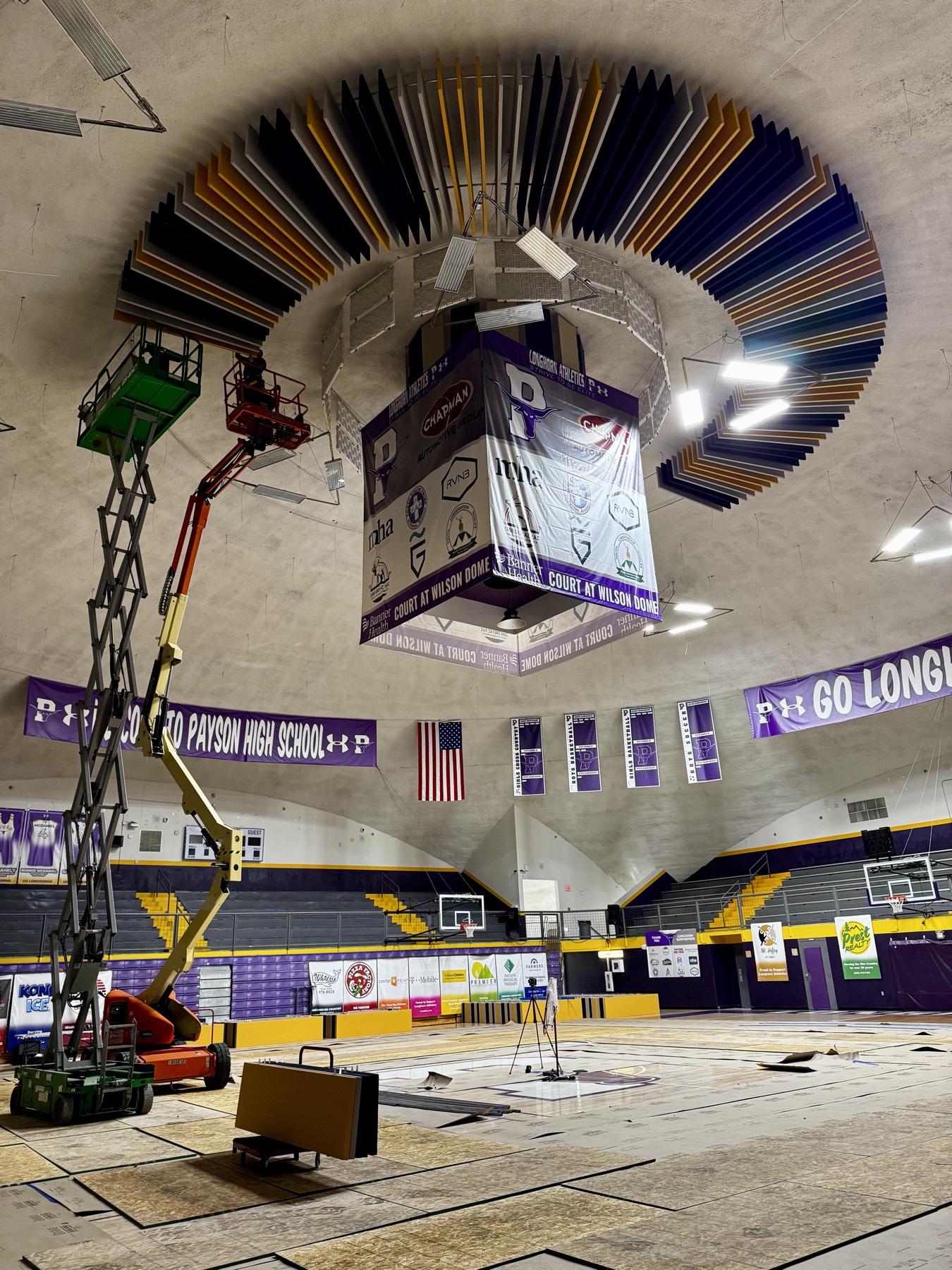
The install, ring by ring — 3,069 frames over twelve days.
Mechanical engineer. Designed the Dome Acoustics treatment system end-to-end — baffle layout, ring suspension concept, install method — and led the twelve-day installation. AZ Acoustics.
Licensed structural engineering for the suspension system: load paths, anchoring into high-strength shotcrete, verification testing on site.
Third-party acoustic measurement and modeling — the before-treatment testing and the auralization above. Their instruments, their report.
The system was developed in consultation with the dome's architect — a career dome designer with roughly a hundred built. Dome geometry is his life's work.
A dome is a curved, hard, continuous surface — concrete or shotcrete with nothing to absorb or scatter sound. Instead of dying out, sound waves refocus toward the middle of the room and arrive at your ear again and again. That persistence is reverberation; in a bare dome it can run five to ten seconds, where a classroom should sit under 0.6 seconds.
The time it takes a sound to decay by 60 decibels — roughly, how long a hand-clap hangs in the room. It's measured per frequency band, because rooms misbehave differently in the bass than in the treble. The single-number convention (ISO 3382-1) averages the 500 Hz and 1 kHz bands. This dome measured 7.4 seconds before treatment.
Yes — that's most of the craft. At Payson the treatment is 540 fabric-wrapped baffles in the school's own colors, arranged in three concentric rings that read as intentional architecture, not a patch. Most visitors assume the room was built that way.
More than most people assume — with real structural engineering. A monolithic dome has no steel frame to clip onto, so everything hangs from engineered anchors in the shell itself. At Payson that's 12,360 pounds, carried on redundant load paths and verified with live load tests before install.
Each use wants a different target. A gym needs speech intelligibility — announcements, whistles, coaching. A sanctuary often wants some liveness kept for music while taming the echo that swallows the sermon. The method is the same: measure the room, model the treatment, install, measure again.
Gyms, sanctuaries, event centers, community domes — send the basics and we'll tell you honestly what a measurement would show and what treatment could do.
